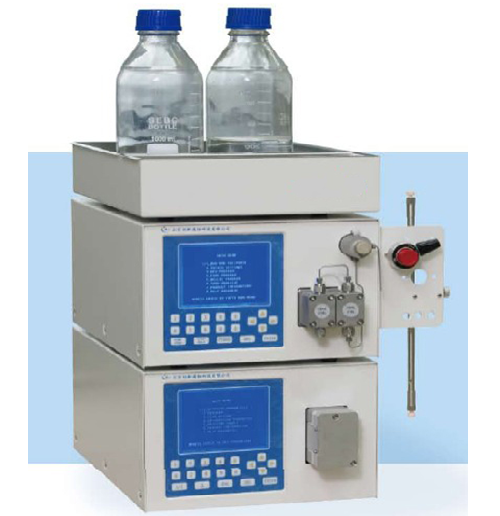
EXPANDABLE ISOCRATIC HPLC SYSTEM
Expandable Isocratic HPLC System
Model ID: CH-LC-01
Configuration
No. | Description | Quantity |
1 | P3000 HPLC pump with 10ml pump head SS *1 | 1 |
2 | UV3000 UV-VIS Spectral photometer with analytical flow cell *2 | 1 |
3 | Rheodyne manual injection valve (20µl sample loop *3) | 1 |
4 | CW-3000 Chromatography workstation | 1 |
5 | Test column C18, 250x4.6, 10µm | 1 |
6 | Start-up kit, analytical | 1 |
7 | Solvent tray | 1 |
8 | Accessories required *4 | 1 |
Note:
*1 According to customer's application, the 50ml pump head can be chosen and brought also for the PEEK pumps head.
*2 Semi-preparative flow cells are available upon request.
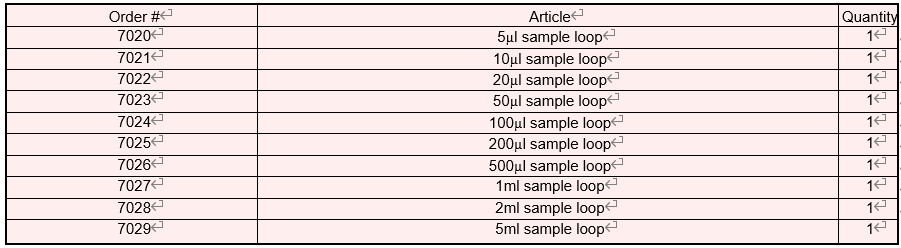
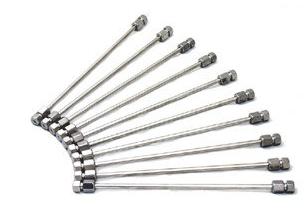
*3 Other type of sample loops is available upon request.
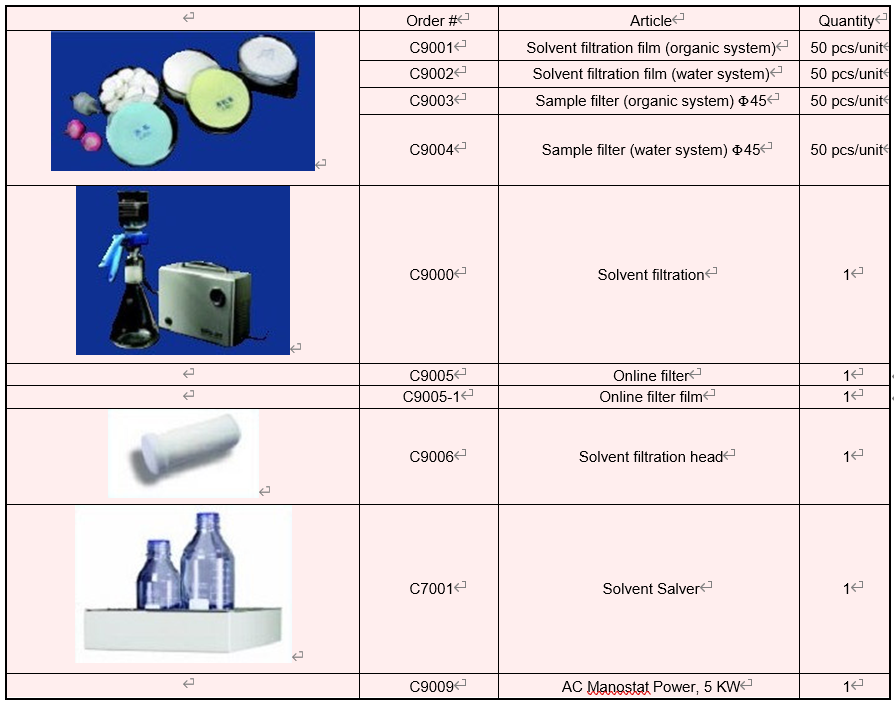
*4 For customers of first using HPLC, it's recommended to equipped with solvent filter, ultrasonic cleaner, AC regulated power supply.
3000 HPLC PUMP - SUPPORT HPG
Introduction
P3000 HPLC Pump is new generations pump that using CPLD technology and controlled by microprocessor. It comes with high precision and high accuracy based on fully digital frequency generation system, advanced motor driver system and friendly user´s interface. The design combines experiences from the most advanced pumps in the world and our own concepts so that a longer period of trouble free can be guaranteed. The P3000 pump can be controlled by front panel keys as well as a PC using communication protocol. The flow rate calibration can be processed at anytime by the firmware that ensures the user to obtain the best analysis reproducibility and high measurement accuracy. In a word, the P3000 pump is more compact and reliable especially the best price!
Specifications
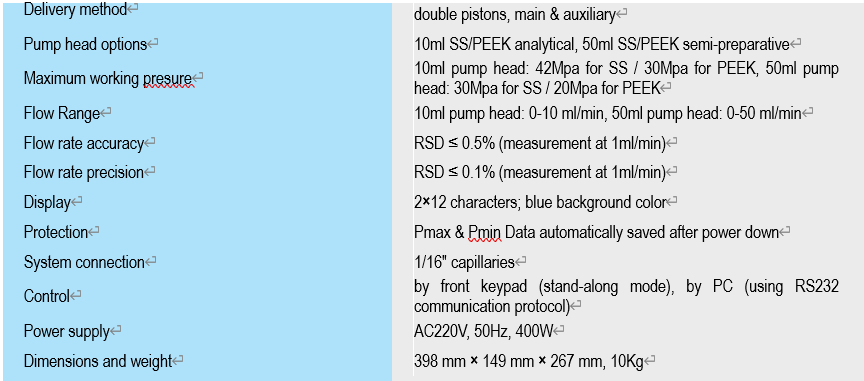
Order Information

UV/VIS SPECTRO-PHOTOMETER DETECTOR UV3000
Introduction
UV3000 is also a spectro-photometer detector. It can be controlled by pc. It can be widely used in chemical analysis, pesticide, pharmacy and chemistry etc. Chromatographic measurement can be carried out at a selected wavelength between 190 and 700 nm. It is possible to change wavelength.
Specifications
Wavelength Range | 190-700 nm |
Light Source | Deuterium lamp (standard) Tungsten-Halogen lamp (optional) |
Wavelength Accuracy | ±2 nm |
Wavelength Reproduction | 0.4 nm |
Detection Range | 0-2 AU |
Baseline Noise | < 1.5×10⁻⁵ AU/h Dynamic flow rate 1ml/min methanol/water=80/20, Wavelength 254 nm |
Baselin Drift | < 4×10⁻⁴ AU/h Dynamic flow rate 1ml/min methanol/water=80/20, Wavelength 254 nm |
Time Constants | 0.1/0.2/0.5/1/2/5/10 s |
Analog Output | ±0.1 ±1.0 ±10V (VIP) |
Integrator Output | 16 grades adjustable |
Auto zero | Full Range |
Digital Data Output | RS232 Interface |
Display | 320 × 240 latticed LCD screen display, adjustable blue background light |
Power | 220V/110V °10%, 50HZ/60Hz, 60W |
Dimensions and Weight | 398 mm × 149 mm × 267 mm (W×H×D),14kg |
GLP Support | Detailed reports with lamp operation time, number of lamp ignitions and further service information. |
Order Information
Order # | Article | Quantity |
C2002 | UV/VIS Spectro-photometer Detector UV3000 | 1 |
C2101 | Deuterium lamp with base | 1 |
C2102 | Tungsten-Halogen lamp with base | 1 |
C2103 | Analytical Flow Cell | 1 |
C2104 | Semi-Preparative Flow Cell | 1 |
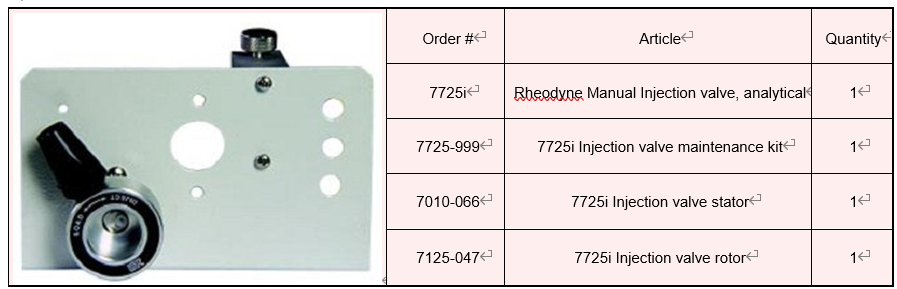
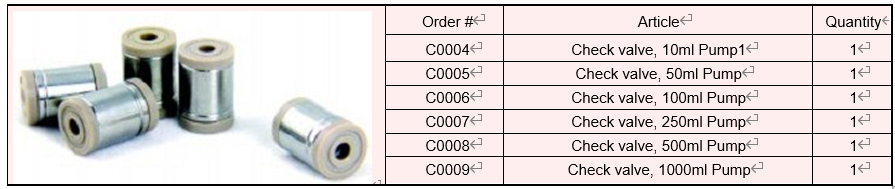
Injection valve / Check valve / Piston Seal / Sample Loop
Injection Valve
Check Valves
Piston Seals

Sample Loops
CHROMATOGRAPHY SOFTWARE CW-3000
CH-LC-01 Chromatography Data Handling System is compatible with any model of chromatographic analytical instrument available in the market. Our state-of-the-art hardware comes in two different models, namely Single-channel and Dual-channel model. For Dual-channel model, while you can connect the two channels to the dual detectors of the same instrument for simultaneous data acquisition, you can also connect them to two different instruments for independent data acquisition.
This software system is structured in such a way that all the sequences related to an analysis (starting from acquisition of raw data signal, to integration of chromatogram, calculation of components quantities, and preparation of analysis report) are incorporated in one source document called Chromatogram file. By applying document window and split window technique, we have designed a one-page document window for you to display all the working elements of a Chromatogram file in one screen for quick access and manipulation.
Each Document window consists of six working tables and a chromatogram frame. While the Chromatogram frame is to display the integrated
chromatogram, the six working tables are uniquely created for you to input and record the various settings to be applied at different stages of data handling. This structure offers you quick access when you need to view the integrated chromatogram, adjust the integration method, select and execute the quantifying method, and print the analysis report.
We also apply multi-thread technique so that you can perform other functions within one Document window when acquisition of data is in process. For example, you are able to adjust the displaying parameter as and when chromatogram is being acquired.
To further improve the speed of operating this system, we apply Multi-Document window technique so that you can work with more than one Document window (or more than one analysis) at one time. This means that while you are acquiring a chromatogram in one Document window, you can re-process an acquired chromatogram in another Document window.
During the process of acquiring data signal, we apply our patented Noise Filtering Method to eliminate noise so that we can detect the weakest level of signal close to Baseline noise. During chromatogram integration, system would select the most appropriate integration method to process every detected peak. Setting of many complicated processing parameters has been intelligently automated in such a way that the number of parameters that you need to adjust is substantially minimized to only one in most of the cases. Should you need to change the integration method of a peak or a certain segment 25 of a chromatogram; you can conveniently effect the change by making only a few clicks on the mouse.
During Quantitative analysis, you can efficiently calculate the calibrators (or average calibrators) or construct calibration curves and conveniently apply them to quantify the components quantities of unknown sample.
During the process of preparing the analysis report, you can opt to include or exclude certain system-calculated results as well as to input external reference information to be included in the analysis report. Such reference information would be permanently stored among other elements of an analysis for future reference in compliance with GLP requirements.
Apart from the Document window and the Six working tables, other unique features of this software system are the Save template command, the Chromatograms compiler and the Results tables compiler. Try to make full use of the Save template command when filling in the Six working tables. The Chromatograms compiler and Results tables compiler enable you to calculate average components, compare; contrast; and overlay past analysis results in various combinations. Armed with CH-LC-01 software system, you are certainly on the way to excellent performance.
Analytical HPLC Column
Introduction
Test column C18 250×Φ4.6, 10µm Analytical HPLC Column
Specifications

OTHER SPARE PARTS
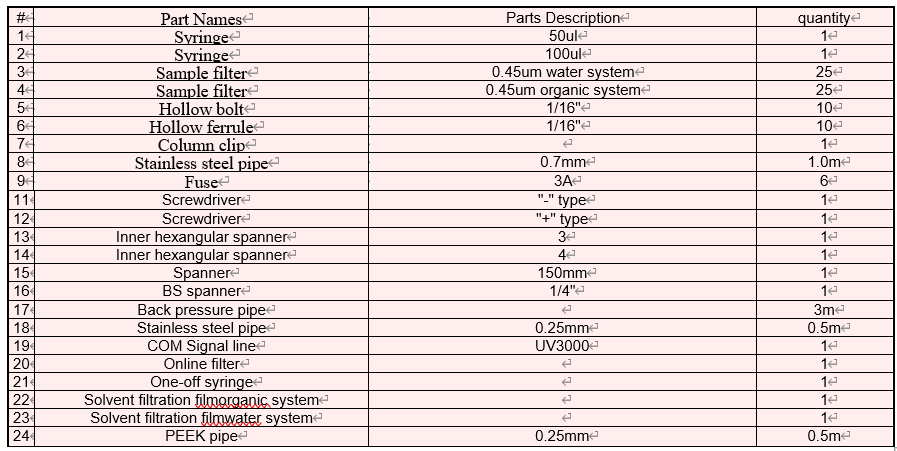
Analytical HPLC start-up KIT
Configuration
Order Information

INQUIRY
CATEGORIES
- Coal Testing
- Petroleum Testing
- Muffle Furnace
- Highway Instruments
- Direct Reading Spectrometer
- Abbe & Auto Refractometer
- Agricultural Instruments
- Autoclave/Sterilizer
- Weighting Balance & Scales
- Safety Cabinet & Clean Bench
- Carbon & Sulfur Analyzer
- Centrifuge
- Clinical Instruments
- Colorimeter & Color Light Box
- Dehumidifier & Humidifier
- Electrolyte Analyzer
- Electrophoresis Cell
- Freeze Dryer
- Gas Generator
- Gene Test
- Heating & Drying Oven
- Pathology Instruments
- Ice Maker
- ICP Spectrometers
- Incubators
- Infrared Thermometer
- Freezer & Refrigeration Products
- Liquid Nitrogen Container
- Biological Microscope
- Microwave Digestion & Extraction
- Mixer & Homogenizer
- Mixer & Shaker
- Moisture Tester
- Oil-in-Water Analyzer
- Pack & Paper Testing
- Automotive teaching model
- Particle Counter
- Plastic Testing
- Particle Size Analyzer
- Polarimeter & Saccharimeter
- Rotary Evaporator
- Sampling Instruments
- Small Instruments
- Spectrophotometer
- Water Purifier
- Water quality detector
- XRF
- Water Testing
- AUTOMATIC TITRATORS
- Thermal Analysis
- Automatic Kjeldahl Analyzer
- TOC Analyzer
- Universal Testing Machine
- Price List of Reagents
- Chromatograph
- Accessories
LATEST NEWS
CONTACT US
Contact: Harry
Phone: 00852-82283663
E-mail: info@lab-kits.com
Add: ROOM 1, 16F, EMPRESS PLAZA, 17-19 CHATHAM ROAD, TSIM SHA TSUI, KOWLOON, HONG KONG
 Send Email